
A mood diary is a simple but effective tool for tracking how you feel over time. By regularly recording your mood alongside what you have been doing, who you have spent time with and what has happened during the day, you may begin to notice patterns that were not immediately obvious.
For example, you might discover that certain activities, environments or interactions tend to lift your mood, while others leave you feeling more tired, isolated or overwhelmed. Once you recognise these patterns, you can start making more informed choices about how to support your emotional wellbeing.
If your mood begins to dip, your diary may remind you of the things that have helped in the past, such as:
- Going for a walk or exercising
- Spending time outside the house
- Speaking to a friend or family member
- Working somewhere different, such as a café
- Getting enough sleep
- Taking time to rest
- Doing something creative or enjoyable
A mood diary is not about judging yourself or trying to feel positive all the time. It is about becoming more aware of what affects you and learning what helps you feel more balanced.
Recognising Unhelpful Thought Patterns
Mood diaries can also help you notice the connection between situations, thoughts and emotions.
For example, Mark may begin to see that his mood tends to worsen on days when he stays at home alone. When he goes to the gym, works from a coffee shop or speaks to someone face to face, over the phone or online, he often feels better.
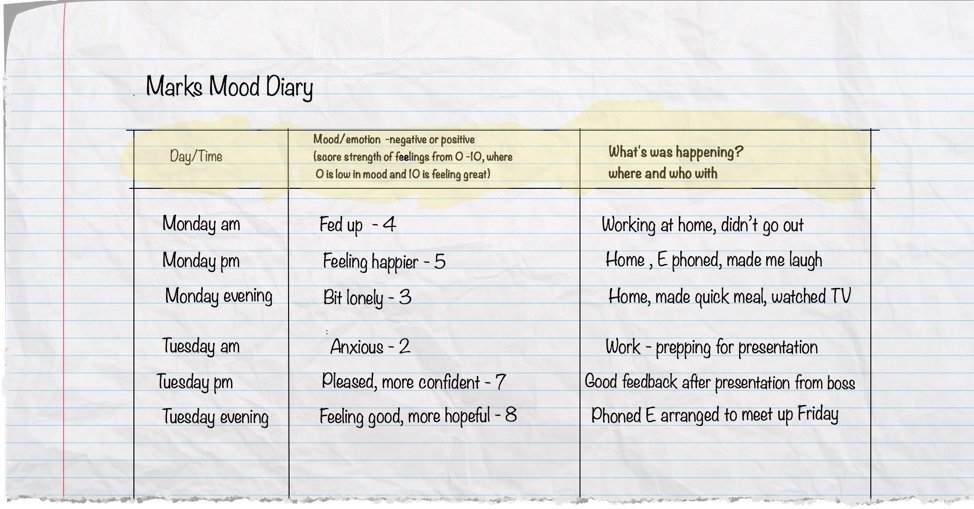
He may also notice that when someone is unable to meet or talk, he automatically assumes they do not want to spend time with him. By recording the situation and reflecting on it later, Mark may begin to recognise that the person could simply be busy and that their response is not necessarily a reflection of how they feel about him.
Becoming aware of these assumptions can make it easier to question them and develop a more balanced perspective.
Using a Mood Diary in Therapy
You can complete a mood diary on your own, but it can also be useful to bring it to counselling or therapy sessions.
A therapist can help you explore recurring emotional triggers, patterns in your thoughts and behaviour, situations that improve or lower your mood, unhelpful assumptions, and practical ways to support your wellbeing.
Over time, your mood diary can provide a clearer picture of your emotional health and help you recognise the progress you are making.
What to Record
You do not need to write a detailed account of your day. A few short notes may be enough.
You could record:
- the date and time
- your mood score
- the emotions you experienced
- what was happening at the time
- the thoughts you noticed
- who you were with
- what helped
- anything that made your mood worse
The most important thing is to be honest and consistent. Even completing your diary a few times each week may help you identify useful patterns.
Download the Mood Diary Template
You can use the template below to help you get started:
A mood diary can be an empowering way to better understand your emotions, identify what supports your wellbeing and take small, practical steps towards feeling better.